Why Texas Is Building So Many Data Centers
How the cloud, AI and Bitcoin mining shaped the Texas data center boom, and what to check when a project comes to your town.
A bank’s records, a streaming video and an AI answer all depend on computers somewhere. What has changed is where those computers sit, how many work together, and how much electricity a single site can need.
The cloud built the first wave
Businesses used to run much of their software in server rooms or in space they rented at shared facilities. Cloud providers gave them the option to rent computing and storage on demand. Amazon launched S3 and EC2 in 2006. As more organizations moved workloads online, shared facilities grew. Lawrence Berkeley National Laboratory estimates U.S. data-center electricity use rose from 76 terawatt-hours in 2018 to 176 in 2023, with growth in both conventional and AI servers.
AWS history · Berkeley Lab electricity report
AI accelerated the buildout
Training large models takes clusters of specialized chips working together. Running the models for users adds demand after training. The International Energy Agency estimates that global data-center electricity use rose 17% in 2025, while use at AI-focused facilities rose 50%. In Texas, ERCOT documented a rush of requests from AI data centers seeking firm electric service. A project can enter the public conversation as soon as it seeks power, years before a building starts serving customers.
IEA · 2026 energy and AI report · ERCOT · large-load briefing
Bitcoin mining brought a different kind of demand
Bitcoin mines use specialized computers to compete for the right to add transactions to the Bitcoin ledger. Electricity is their main operating cost, and some Texas mines have agreed to cut use during periods of grid stress. A former mine can give an AI developer a site and a power connection to build on. AI still requires different computing equipment and may require different buildings, networking, cooling and backup power.
EIA · how Bitcoin mining uses electricity · EIA · large electricity users in Texas
Two Texas paths to AI
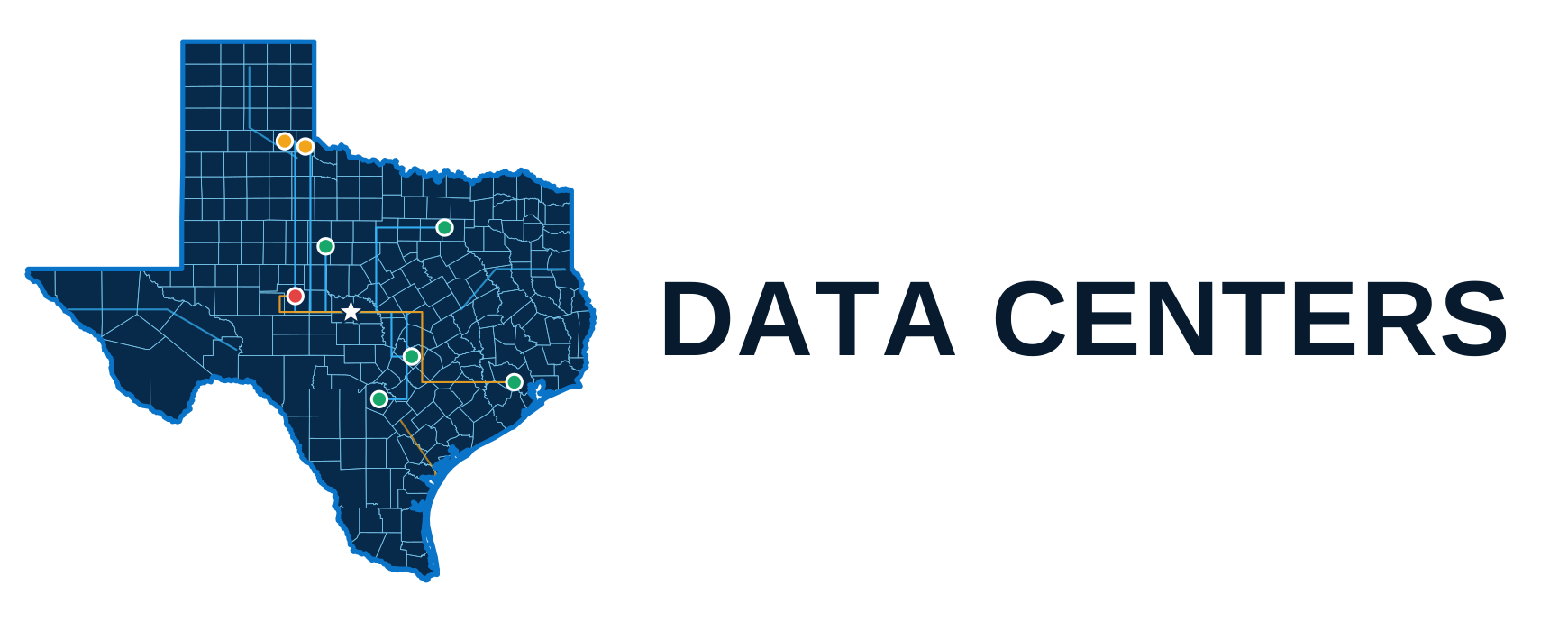
Dickens County. Galaxy acquired Helios as a Bitcoin mine in 2022. Galaxy later reported delivering 133 MW of critical IT capacity to AI cloud provider CoreWeave in the first phase of Helios I. Its October 2026 results describe the next phase as under construction.
Galaxy · original acquisition · Dickens County · phase-by-phase sources
Abilene. OpenAI reported in January 2026 that the first Stargate site was already training and running AI models. Crusoe separately announced an adjacent campus for Microsoft. Keeping those developments separate helps residents track which buildings, timelines and infrastructure commitments belong to each project.
OpenAI · January 2026 report · Abilene · phase-by-phase sources
What to look for in your town
Start with who will use the facility and what they will use it for. Find out which phase has power, which phase is being built, and which still depends on approvals or a customer. Then look for the written commitments on water, roads, emergency response, and jobs that will last after construction. Where the records are incomplete, the next public agenda or permit filing may be where the answer appears.